










If you’re getting website traffic but not inquiries, sales, or sign-ups, you’re probably not imagining it… something is off. I see this all the time. Business owners with beautiful websites that technically “work,” but don’t convert. When you’re left with no momentum, no leads or traction it can be disheartening to say the least.
After 12+ years designing and auditing websites, I can tell you this with confidence: when your website is not converting, it’s seldomly just because you need more traffic. More traffic will not fix a website that is fundamentally broken. Even a hundred visitors to your site a month should have the potential to convert at least 2-5 people.
So, why isn’t my website converting? (the quick answer)
In most cases, a website isn’t working because it lacks clarity, trust, or a clear next step. Visitors don’t immediately understand what you do, who it’s for, or what to do next, so they leave. It’s rarely a traffic problem and almost always a messaging, structure, or conversion issue.
If your website is technically “working” but not producing inquiries, sales, or sign-ups, one (or more) of these is almost always the culprit…
- Your website doesn’t clearly explain what you do or who it’s for fast enough.
- Your messaging is too broad, so the right people don’t immediately feel seen.
- There’s no clear next step guiding visitors toward action.
- You’re getting traffic, but nothing is designed to capture or convert it.
- Your design looks good, but it isn’t supported by strategy or strong copy.
If you’re feeling aligned with one more of these issues, the good news is this is fixable.
Here’s a break down of each those issues, why they’re killing conversions, and exactly what to fix so your website can start converting more of your visitors.

1. Your website doesn’t give people clarity fast enough
If someone lands on your website and can’t immediately answer:
- Who is this for?
- Is this for me?
- What should I do next?
…they leave, quickly and quietly. This is one of the biggest reasons a website isn’t converting, even when your design technically looks “good.”
How to fix it:
To fix this issue, your homepage should clearly communicate:
• who you help
• what problem you solve
• what the next step is
All above the fold… don’t make them scroll to figure this out. If you’re not sure what your site is actually communicating, this is exactly what I look at first in a website audit.
2. You’re trying to appeal to everyone (and converting no one)
When your messaging feels vague, safe, or overly polished, it usually means one thing… you’re holding back.
And when you hold back, your website becomes forgettable. If your website sounds like it could belong to anyone in your industry, it won’t convert for anyone in particular either.
Here’s the tough love: You need to speak to your ideal client and stop worrying about everyone else.
How to Fix It:
Write like you’re speaking to one specific person, the one you most want to work with. The right people will feel seen. The rest will self-select out (which is a good thing).
If you’re having trouble figuring this out, you should download my FREE Magnetic Messaging Workbook to make sure the words on your website resonate better with your dream clients.

3. You built the site… but didn’t build the system
A website without a strategy is just a digital business card that no one is looking at. If you’re relying on people to “reach out when they’re ready,” or just magically find you, then your website isn’t converting, it’s waiting.
Fix It:
Your website should actively guide visitors: 1) toward a next step that feels easy e.g. contact form 2) toward an opt-in that aligns with your paid offerings 3) toward a clear service
This is where SEO, content, and design work together… not separately. It especially helps to understand the SEO side of the equation, like how to choose keywords that actually attract the right traffic in the first place.

4. Your website isn’t doing any of the heavy lifting
If your site isn’t: growing your email list, educating your visitors or pre-qualifying potential clients… then it’s not pulling its weight.
This is especially common on DIY websites and template-based sites that were launched quickly but never optimized. Don’t worry you can still fix this.
How to fix it:
To fix this you simply need to add intentional conversion points throughout your site:
• pages designed to answer objections before someone ever contacts you
• lead magnets that actually solve a problem
• CTAs that feel like an invitation, not a demand
Related Post: The Bullet-proof Website Strategy: Convert Your Visitors into Customers
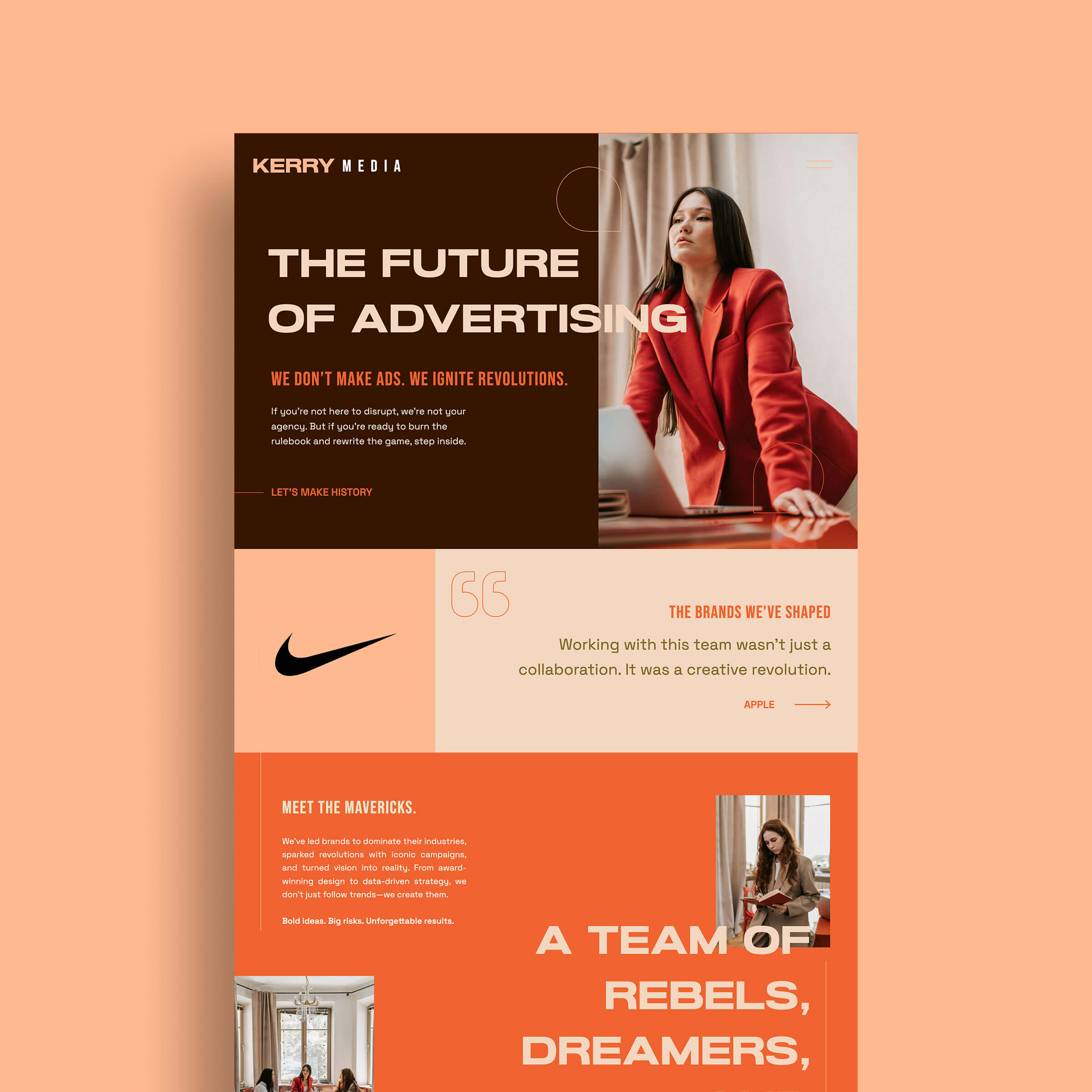
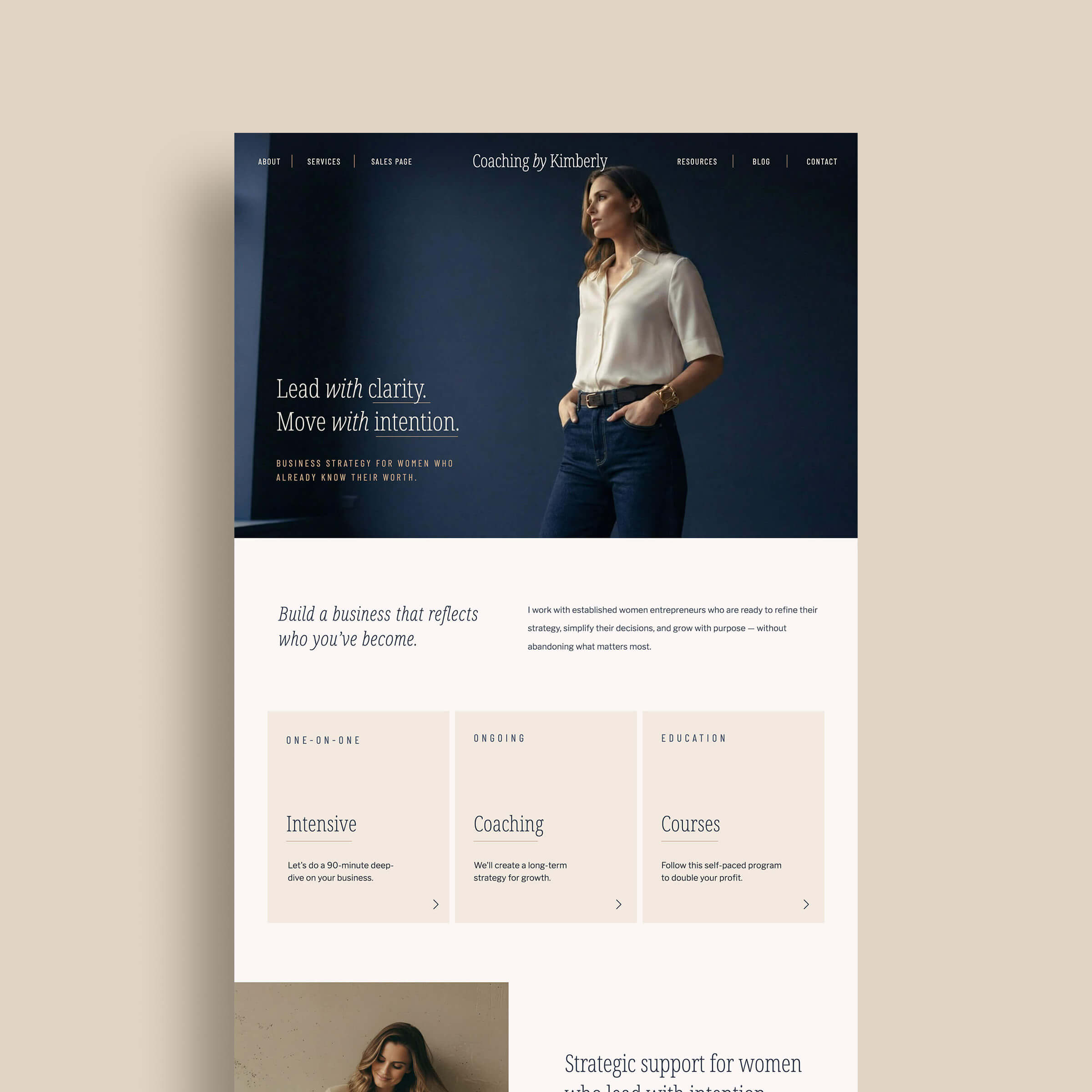
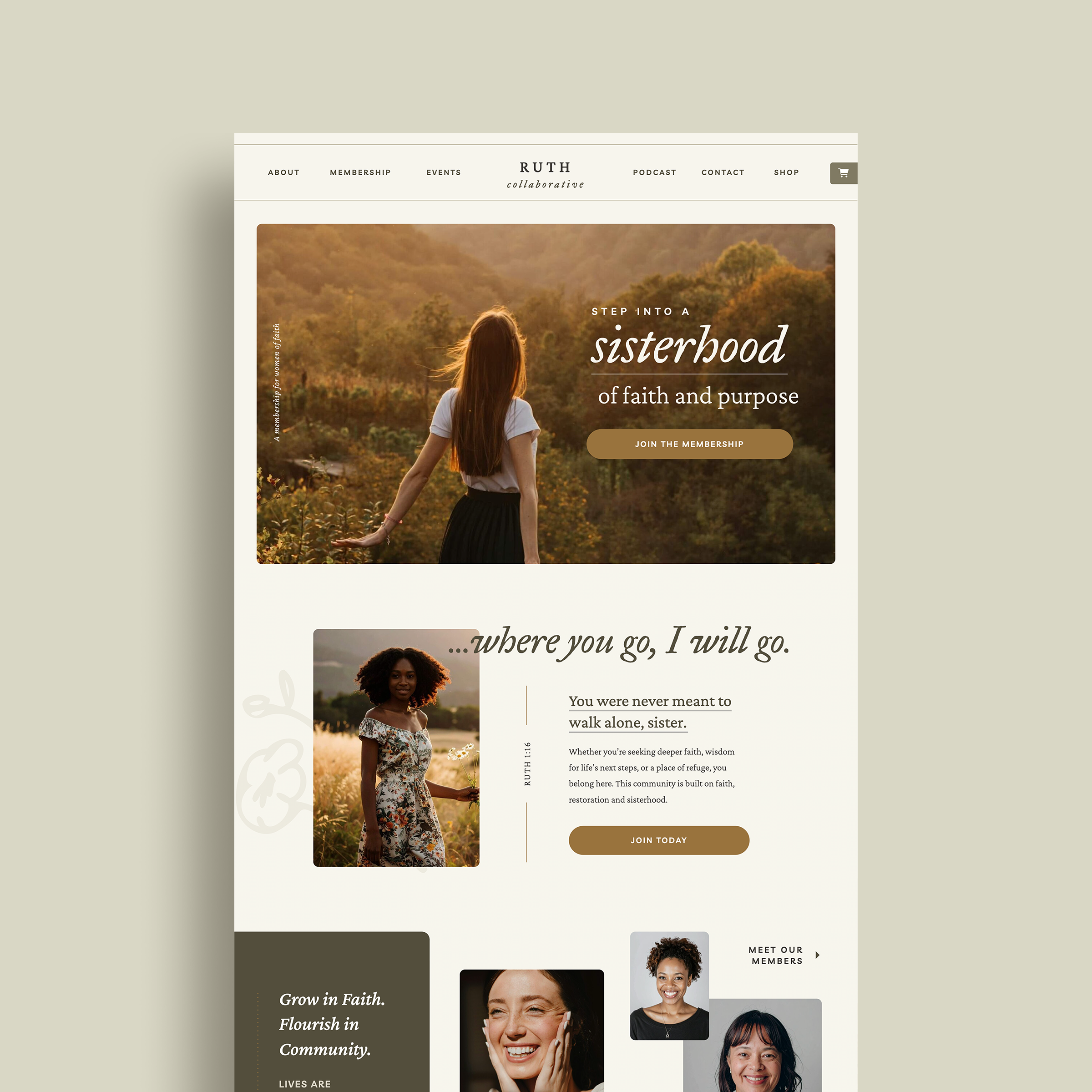
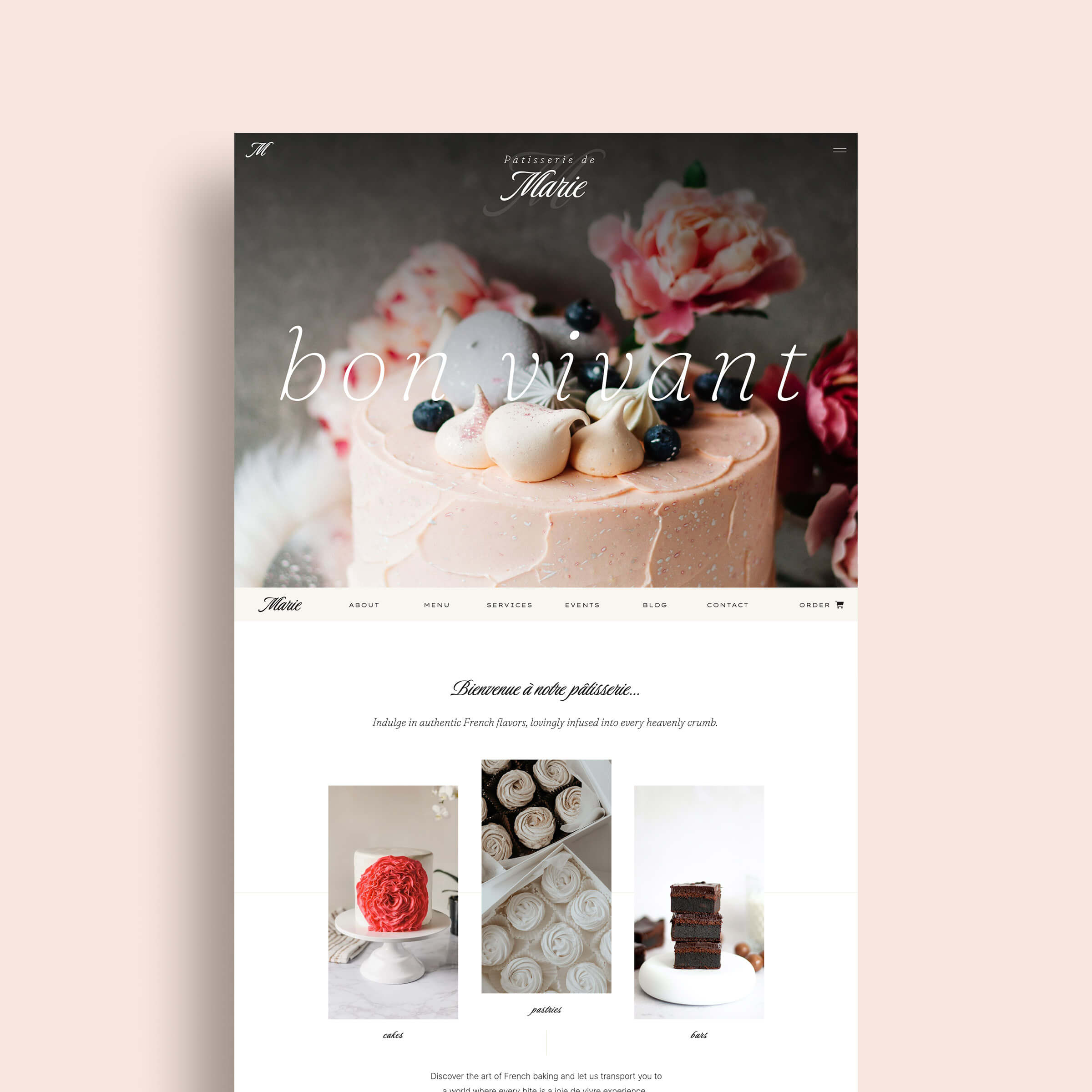
5. Design without content + strategy is just decoration
This is the part most people don’t want to hear.
A beautiful website without strong copy, structure, and intent won’t convert… no matter how good it looks. Design alone doesn’t persuade. It supports persuasion.
When design, messaging, and SEO aren’t working together, your website ends up doing a lot of showing… and very little selling.
Fix It:
If you’re going to invest in a web designer (hi, 👋 that’s me!), make sure you’re also ready to invest in high-quality copy and your SEO (or some other traffic source). Your website’s design, copy, and SEO should be developed as a system… not separate pieces added at different times.

What happens when you fix the right things
Let me tell you about one of my all-time BEST client success stories…
My client was trying to sell their products on an outdated platform that felt more like an archaeological dig than an e-commerce site. Their site was confusing, disorganized, and lacked any branding whatsoever. They knew it was holding them back so we decided to rebuild everything from the ground up.
We developed their branding, switched to a new platform with search capabilities, planned out and organized the entire site and within the first year after launching… $1.2 million in sales.
That result isn’t typical…but the principle is still consistent: when a website is built to support how people actually make decisions, conversions usually follow.
It was a prime example of how a strategic design and streamlined user experience can make or break your business.
Okay, but what about…
If you’re wondering whether your website issue is traffic, design, SEO, or something else entirely, here are the most common questions I get when a site looks fine but isn’t converting.
Even a modest website should convert 2–5% of qualified visitors. That means:
– 100 visitors/month → 2–5 inquiries, signups, or sales
– 1,000 visitors/month → 20–50 conversions
If you’re getting traffic with zero momentum, that’s a sign that something in your messaging, structure, or CTA strategy needs attention.
This is one of the most common situations I see… and it usually has nothing to do with “needing more traffic.” In most cases, one of three things is happening:
– The traffic is top-of-funnel (people researching, but not buying yet)
– Your site isn’t clearly guiding visitors toward a specific next step (this is key!)
– Your messaging isn’t immediately confirming, “You’re in the right place”
Traffic alone doesn’t convert. Clarity does. If visitors don’t quickly understand who you help, what you offer, and what to do next, they’ll leave, even if they found you through Google.
Not necessarily… but it can. Many websites attract informational visitors (students, DIYers, researchers) when the content isn’t necessarily or intentionally aligned with buyer intent. That doesn’t mean the traffic is useless. It just means you need to meet visitors where they are.High-performing sites do one (or more) of these usually:
– Capture emails with relevant content upgrades / lead magnets
– Segment / guide readers by intent
– Offer a clear bridge from education to solution
You don’t need perfect traffic. You need a path forward for the traffic you already have.
Almost never. Sending more people to a confusing website is like turning up the volume on a broken speaker… it gets louder but that doesn’t mean it’s any clearer. If your site isn’t converting 100 visitors, it won’t magically convert 1,000. Before focusing on traffic growth, you need:
– A clear primary call-to-action
– Messaging that confirms relevance immediately
– A logical path from content to conversion
Fix your website’s foundation first. Then you can scale your traffic.
Here’s where I think you will see the most return for your efforts:
1. Your main headline + subheading
2. Your primary call-to-action
3. The path from content to conversion
You don’t need a full redesign to see improvement… but you do need intention. Small changes in clarity and structure often create outsized results.
Key Takeaways
If your website isn’t converting, it doesn’t necessarily mean you need to start over completely. It usually just means a few critical pieces need to be clarified, restructured, or aligned.
If you want help figuring out what those pieces are…and what will make the biggest difference for your business, I’d love to help.
Whether that looks like a website audit, a strategic website redesign, or a smarter starting point with a website template, we’ll make sure your site is actually working for you.
Or if you need a solution that’s a little more DIY… my DIY Website Planner walks you through everything from planning to writing and designing your website.
Building a website that actually works for your business doesn’t have to be overly complicated but it does require intention & strategy. If you’re feeling overwhelmed or just want to make sure you’re not wasting your time, I’d love to help you streamline the process and design a website that not only looks great but works for you.
Let’s chat about how we can make your site work harder (so you don’t have to).
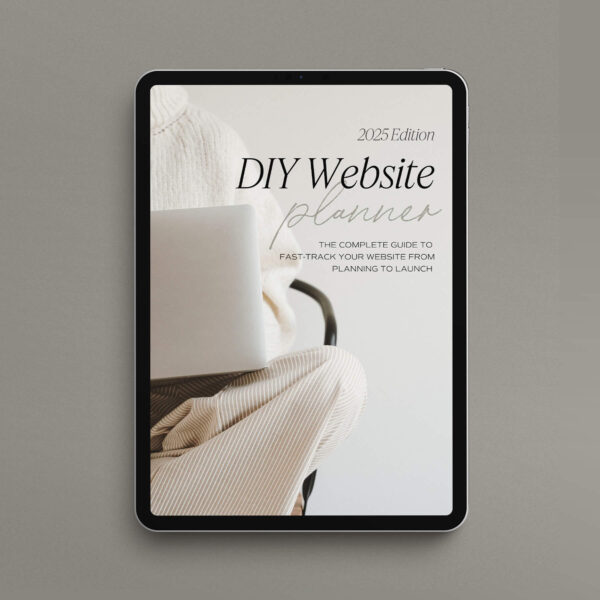
DIY Website Planner
The complete guide to plan, write, design, build and launch your website in just 4 weeks. Is your website months in the making with no end in sight? Or maybe you have been too overwhelmed to even know where to start. Get this all-in-one interactive PDF workbook packed with expert website tips, processes, step-by-step worksheets and resources to help you launch your website in just a few short weeks