














One big marketing move a lot of business owners miss out on is blogging.
I get it. Blogging can seem like a total headache at first, or just another thing to add to your growing list of responsibilities in your business. But I fully believe once you get into a rhythm of blogging intentionally, the benefits far outweigh the small investment it requires of your time.
In fact, “in 2025, blog posts were among the top 5 highest-ROI content formats according to marketers.”.
So, if you’re sleeping on blogging, maybe it’s time to wake up and see what all the fuss is about.
What a Blog for Business Really Is (and what it’s not)
Creating a blog for your business isn’t just so you have a place to write whenever inspiration strikes. A business blog should be used as a strategic marketing tool designed to support your business goals, whether that’s booking clients, selling products, or positioning yourself as an expert in your space.
Keep in mind your business blog is not:
- A personal diary
- Random updates with no clear purpose
- Writing just for the sake of “being consistent”
Instead, blogging for your business means:
- Creating content your ideal customers are already searching for
- Answering questions that come up before someone is ready to buy
- Writing posts that naturally connect to your services, products, or offers
When done well, a business blog works in the background of your website, attracting the right people, educating them, and building trust long before they ever click “contact.”
Benefits of Blogging for Your Business
What I believe sets blogging apart from other marketing tactics is that it doesn’t intrude in your audience’s daily life or disrupt their feed like traditional ads or marketing.
Think of those annoying car commercials you see practically yelling “buy, buy, buy!” or the endless SPAM phone calls. It’s so easy to tune these things out out or send them straight to voicemail.
Blogging, on the other hand, gives your visitors the info they want on their terms, usually when they are already actively looking for the information you’re ready to provide. Your audience is in control of the journey and not forced into a space or decision they weren’t prepared for.
Blogging can majorly boost your website traffic
When you blog for your business, you’re basically creating a sweet little goldmine of valuable content for potential customers and anyone hunting for answers.
Search engines like Google, Bing and even ChatGPT crawl your blog content for keywords and file it away. Then, when people type in those keywords, bam…they find your blog and, even better, your business. 😉

I like to think of each of my blog posts like a ticket to the lottery. The more you blog, the more pages you create for your site and the more opportunities (and lottery tickets you have) you create for people to find you through information they are seeking.
Blogging builds instant equity for your site and your business. Check out some of the statistics:
Tons of sources back up these numbers, showing how blogging can seriously benefit your business.
I believe blogging is one of the best ways to drive traffic to your site without spending a dime on ads. Once you’ve got that traffic, you can sell your services/products or run display ads to cash in.
Blogging can drive sustainable inquiries + shorten sales cycles
Yep, blogging can increase website traffic, but for businesses, that’s only part of the story. A well-planned blog can also:
- Pre-qualify potential clients
Your blog posts answer common questions and objections upfront, so the people who reach out are already aligned with your approach and pricing. - Shorten the buying cycle
When someone has already read multiple blog posts from you, they’re more likely to trust your expertise and move forward faster. - Support your offers without sounding salesy
Blogs allow you to naturally introduce your services or products in context, rather than relying on hard sells or constant promotions. - Turn your website into a long-term asset
Unlike social media posts that often disappear in a day or two, blog content can drive traffic and leads for months, even years, after it’s published.
In other words, blogging doesn’t just bring people to your site. It helps move them closer to working with you.
Blogging builds trust and authority
Posting regularly helps you build relationships and trust, leading to new clients, loyal readers, and awesome business collabs.
Well-researched, in-depth blog posts on specific topics are a super easy way to show off your expertise. As a branding and web design studio, we’ve got a ton of blogs on things like websites, SEO, and typography because that’s our jam… we do it every day and know it inside out.
When your website becomes a go-to spot for valuable info, your audience will keep coming back because they know they can count on you for the answers they need.

How to Start Blogging for Your Business
Develop Your Blogging Strategy
Create a plan for your blogging efforts to stay organized and on track. Think about how many times a month you want to blog and how much time you have to dedicate to writing each post. Depending on your writing abilities you may need to set aside between 2 and 4 hours to write and edit each post.
The key is to stay consistent. Ideally, a weekly blog post will keep your website fresh for search engines, and will help you build up a backlog quicker, but if that feels overwhelming, start out with one post a month and work your way up.
Just like you may have content pillars or focuses for your social media, you can implement the same framework with your blog. For example, our blogging categories include:
You don’t need to have this many, but choose 3-7 categories that you feel comfortable talking about and that align with your business.
Examples of Strategic Blog Topics for Businesses
When blogging for your business, your content should support what you actually sell, not just what’s easy to write about.
For example, some strategic blog topics that focus on websites and design that I have written about personally are…
- How Much Does a Custom Website Really Cost?
- Showit vs WordPress: Which Is Better for Service-Based Businesses?
- What to Expect When Working With a Web Designer
- Common Design Mistakes Businesses Make When DIYing
These types of posts don’t just attract random traffic… they attract qualified visitors who are already thinking about investing.
Think how you can apply this same logic to your own business niche or industry and come up with some blog post ideas that you think will target people that are considering outsourcing help.
Regularly doing keyword research can also help you brainstorm blog post ideas for each category and keep your content relevant. One of the easiest ways to research keywords is to check out Reddit or the “People also ask” section on Google. These are terms with high search volume already, so you’re tapping into what people really want to know!
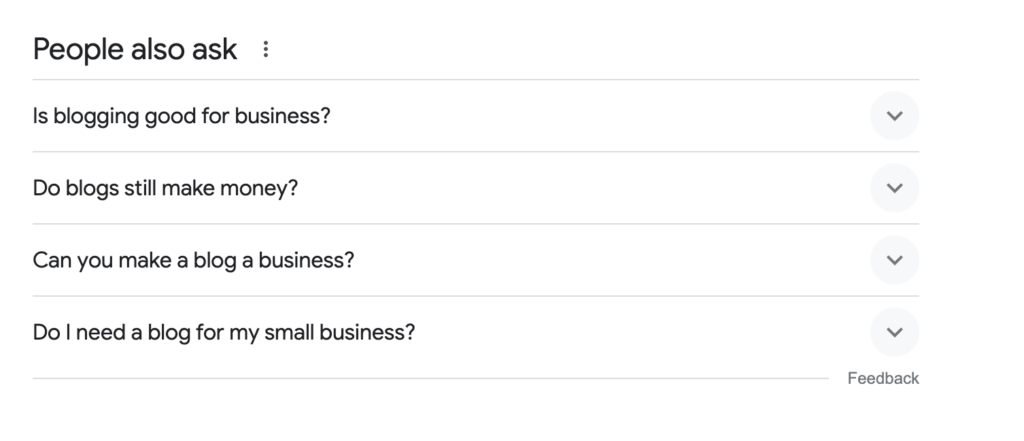
We also recommend tracking your keywords and blog stats in a Google sheet or content management app like Notion or Trello to help you stay consistent and stay on top of how your content is performing over time.
Set Up Your Blog for Your Business
Good news! Most website platforms already come with built-in features so you can blog. If you are using, or want to use, a popular website builder such as WordPress, Showit, Squarespace or Shopify, then you can add a blog easily to your website, without a lot of extra work.
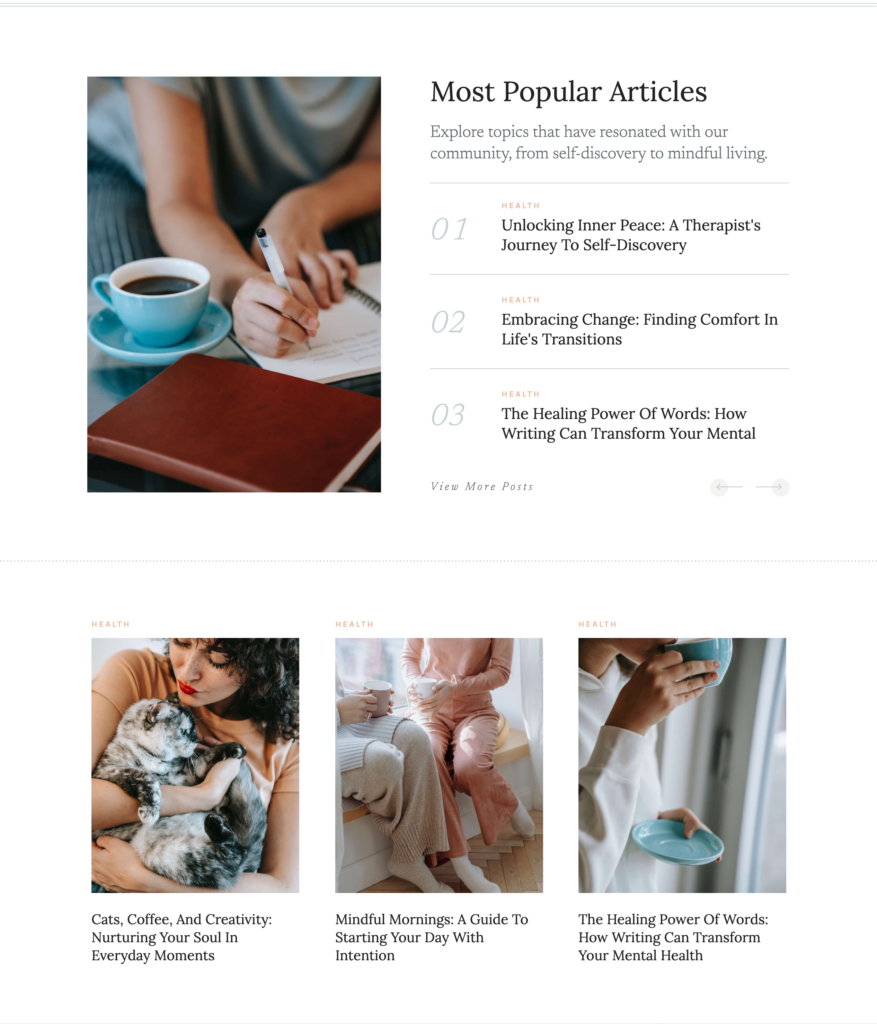
This is a preview of the blog feed from our Jenny Showit website template which works with WordPress. All of the templates in the K Design Co shop. come with a blog feed page design and single post option.
We set up this blog feed to display popular posts and different categories, but you can opt for just a simple display of all of your posts, or use whatever layout your website theme or template allows.
Related Post: 9 Must-Have Elements for an Irresistible Blog Design
Write Your Blog Post
Once you have your strategy in place and your blog setup, the only thing left to do is write your first blog.
1. Choose your blog topic & create an outline
Use the categories you set up in your strategy as a starting point for deciding on a topic to write on. Using ChatGPT can be great for getting the ideas flowing.
Here are some prompts to get you started generating blog post ideas with ChatGPT:
What are some frequently asked questions or misconceptions about [a particular aspect of your niche] that I can address in a blog post?
What are some current issues or challenges in [your niche or industry] that would be worth exploring in a blog post?
Once you’ve chosen a topic, creating a simple outline of your blog is the best way to get past blank page syndrome. You can use ChatGPT for this too, just make sure you using it to enhance and accelerate your writing process, not fully replace it.
Check out this blog for even more ChatGPT prompts for blogging.
2. Format your blog content so that it is easy to read using headings, bullets and numbered lists
List posts, or listicles, are one of the easiest ways to dive into blogging. Basically, you pick a topic and create a list of 5-10 things, writing a few sentences to a few paragraphs about each item. This not only helps you get comfortable with writing a post, but also makes it super engaging for your readers. Plus, it’s a great way to share a lot of valuable info quickly and keep your audience hooked.
(List-centric posts are some of the top-traffic-earning content on our blog! They also work really well for bringing in affiliate income when I promote affiliate products like luxury fonts or script fonts.)

3. Write your content with keywords that you are targeted for your business
If your blog post is about ‘how to blog for your business” then you’ll want to use that phrase throughout the headings and body text of the blog, and also similar phrases such as ‘blogging for business,’ and ‘business blogging’.
Just make sure you don’t stuff your blog post with too many keywords or else Google may ding you for shady black hat SEO. Most of the time, I write my blog post first and then go back through it to see where certain phrases could be replaced with my keyword or a variation.
This post can help you with identifying the right keywords if you need some more in-depth guidance.
4. Include links to relevant pages/blogs on your website
You likely may have noticed a few underlined + linked words and phrases in this blog post. Those are links to other related blogs or pages on my site.
Interlinking your content like this not only helps Google understand your website better, but also can encourage users to stick around on your website longer. Just remember to update both new and old blog posts with fresh links as you create more content.
The more you write, the more opportunities you’ll have to connect everything together.
5. Shoot for a word count of 1000 words or more
Tailor your blog length to your specific audience and the topic you are writing on. Some audiences prefer shorter posts while others prefer longer so there is no perfect blog length. However, some recent research suggests that longer articles, those with over 1000 words, tend to perform better in search. Just something to keep in mind.
6. Include at least one image
But we often recommend more. Our best performing posts have several images in them actually.
Use images that relate to what you’re talking about and add value to your points. Some great resources for free stock photos you can use are Unsplash and Pexels. Or check out a paid stock photo service like Haute Stock*. (You can even download 20 free photos right now without a subscription!)
Make sure to include ALT text on your images to help with accessibility and SEO!

7. Make the title descriptive, unique and click-worthy
We usually wait until after our blog post is written to finalize our blog title. That way we can be sure it captures the full idea of what the post is about and the process of writing, can also stir up some inspiration that we didn’t have before.
The best length for a blog post title is ~8-12 words but you can experiment with what works best for your audience. The main thing you want to make sure is that your title includes your target keyword phrase.
I’ve also found that blogs with titles that are more specific tend to attract the most interest and engagement, for example:
- 10 Low-Key Reasons Why…
- 5 Little-Known Secrets on…
- How to or How I…
- 7 Expert Lessons in…
- 3 Things You Didn’t Know About…
Pro-tip: Our best ranking blogs that bring us the most traffic, almost always have a number in the title!
8. Create a call-to-action at the end of your post
What do you want the reader do next? Visit your website? Contact you about services? Get more information on a certain topic? Download resources? Make their next step clear and easy.
If you aren’t including a call to action at the end of every blog post you are missing out on truly engaging your traffic by not giving them a reason to stick around.
9. Promote your blogs
One of the easiest ways to get your blog posts in circulation with your audience is through social media and email. If you’re sharing your blogs on social media (and you should be), encourage your followers to engage with and share your posts as well. If you aren’t sharing your blogs, you are doing a disservice to all the hard work you put into writing.
Every time I post a blog, I also send out an email newsletter letting my subscribers know there is new must-read content just published on their favorite topics.
10. Make Blogging Part of Your Routine
Blogging works best for your marketing when you’re consistent AND write quality, helpful content… But sometimes you just don’t feel like writing at all, let alone sitting down to think up another amazing blog post.
Companies with consistent blogging practices are 13× more likely to see positive ROI from their content efforts than those that publish inconsistently.
– DEMAND SAGE
13x more likely?? Wheeww!! All the more reason why we think consistency is 100% non-negotiable when it comes to blogging.
Some of our favorite tricks to stay consistent and motivated are setting a specific day of the week to write your blog post or sprucing up old blog posts (if you can’t come up with an idea for a new one).
Related post: Blogging Tips: How to Blog Consistently (Even When You Don’t Want To)
If you’re already blogging consistently for your business but still not seeing traffic, this post breaks down why blogging isn’t working for many businesses anymore.

Keyword Intent (why some blog posts bring customers and other’s don’t)
A quick note on keyword intent
Not all blog posts are created equal. Some posts are purely informational, which means their great for awareness and traffic. Other types of posts should be written with buyer intent in mind, meaning the reader is closer to making a decision.
For example:
- What Is Branding? → informational blog post
- How Much Does a Website Cost for a Small Business? → buyer intent
A strategic blog for business will actually include a mix of both types of content:
- Informational posts that build authority
- Strategic posts that naturally lead readers toward your offers
Understanding intent helps ensure your blog isn’t just getting views… it’s supporting real business growth.
Got more questions about blogging for business?
Here are a few more things you might still be thinking or wondering about blogging.
It depends. I think asking yourself 2 questions will help you figure out if blogging for your business is something that is going to be worth it.
1) Are you looking for a way to grow your website’s traffic long-term? (This is not a get-traffic-quick kind of tactic.)
2) Is it something you can commit to consistently?
Too often I have clients tell me they want to add a blog to their website because they know it’s something they should do, but the enthusiasm for their blog quickly dies after relaunching their website and then they end up with a website that hasn’t had a new post published for the past 3 years.
If you can’t truly commit to blogging at least once-a-month, you should try other marketing strategies to drive meaningful website traffic.
Personally, I’ve seen the most momentum with my blog in seasons where I was writing one blog per week, but I think the most important thing is to create a schedule you can actually commit to it, whether that’s once-a-week or once-a-month.
If you aren’t blogging though, however, you can’t expect that your website is going to magically draw lots of organic traffic. Having a good foundational SEO usually only can take your website so far so if you’re serious about getting traffic through SEO, blogging is something you should seriously consider. Otherwise, you’ll need some other traffic source like social media, email newsletter marketing or paid ads, to bring in more visitors to your website.
I think most people overthink this step. Honestly… just do it! You will learn as you go!
I think the most important thing is to figure out who your blog audience is and what they want they want to hear your talk about. Once you’ve carved out your niche, it will making figuring out what posts you should write a lot easier.
Of course, you’ll need to get a domain and start with some kind of website template, but other than that there are not a lot of technical requirements for getting started with blogging.
After you publish your first blog post, I believe you’ll see that blogging is actually easier than you’re making it out be in your head.
Yes, you totally can, however I wouldn’t expect to make money instantly off of your first blog post.
There are 3 ways you can monetize your blog:
1) drive traffic to services that you may offer
2) drive traffic to your own products
3) promote affiliate products that you get commissions for
Additionally, once you grow your traffic to a certain level, you can also embed display ads or sell sponsored post spots on your website.
For me driving blog traffic to my services and products that I offer has been the most profitable way to earn money blogging, but I believe any of these avenues can be a great fit. You’ll need to figure out your long-term goals for your business to determine what makes the most sense for you.
Absolutely. I credit my blog for the majority of my website traffic and inquiries for my services. Without a blog, I would have to rely on other channels to drive traffic to my website.
My blog is also a great way to keep people on my email list coming back to my site and engaging with my content. Not only does it create another touch point with my audience, but is also positions me as an authority of my writing topics.
There is really no downside to blogging, in my opinion, other than the time commitment it takes to write your content… And once you start seeing the impact of blogging on your traffic and inquiries, I think you’ll find the time commitment is 100% worth it.
Blogging can be incredibly effective… but it works best when it’s actually aligned with your business model. A blog for business is especially powerful if you:
– Offer services, coaching, or expertise-based work
– Sell digital or physical products people research before buying
– Want to build authority in a specific niche or industry
That said, blogging may not be the primary growth strategy for businesses that rely solely on referrals or hyper-local foot traffic, unless it’s paired with a strong SEO or local content strategy.
The key isn’t blogging more.It’s blogging with intention, so each post serves a clear purpose in your overall business.
Here’s the real takeaway I want you to get out of this post…
Blogging for your business isn’t just about creating content for the sake of it. It’s about creating helpful, strategic resources that work for your business even when you’re offline.
When you approach blogging with this kind of clarity and consistency, your website becomes more than a stale set of pages, it becomes a tool that attracts, educates, and converts the right people over time.
If you’re ready to set up a blog that actually supports your business goals (and not just your to-do list), we’d love to help, reach out to me here.